

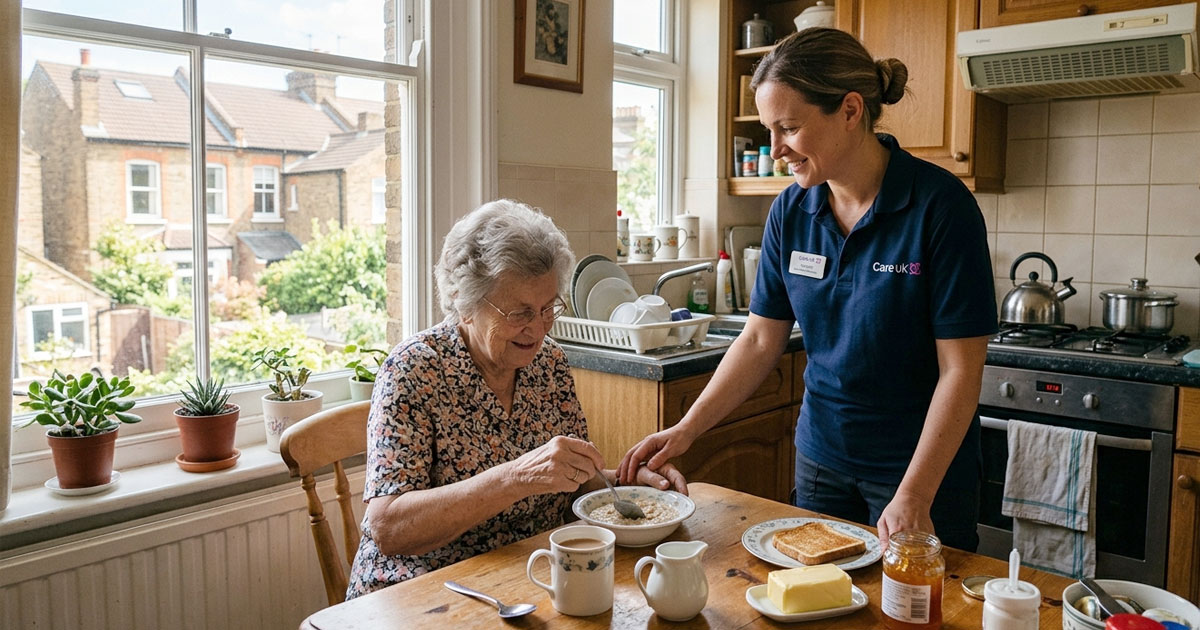
If you are considering home care for an older parent or a loved one with a disability or long-term condition, one of the first questions you are likely to ask is: what does a domiciliary care worker actually do? The answer is broader than many people expect — and understanding the full scope of the role can help you make a more informed decision about the type of care that is right for your family.
This guide explains the duties of a domiciliary care worker, how visits are structured, what to expect from a professional home care service, and why choosing a CQC-registered provider in Richmond, Hounslow, or across London matters.
What Is Domiciliary Care?
Domiciliary care — also called home care or community care — is professional support delivered in a person's own home rather than in a care home or hospital. It enables individuals who need assistance with daily living to remain in familiar surroundings while receiving the help they need.
Domiciliary care can be arranged for older adults, people with physical disabilities, individuals living with dementia or Alzheimer's, those recovering from surgery or illness, and anyone who needs extra support to live safely and independently at home.
In Richmond, Hounslow, and across Greater London, demand for high-quality domiciliary care continues to rise as more families seek alternatives to residential care that preserve dignity, independence, and a sense of home.
Core Duties of a Domiciliary Care Worker
A domiciliary care worker's responsibilities are shaped by each client's individual care plan, which is agreed between the care provider, the client, and their family or GP where relevant. However, most domiciliary care roles include some or all of the following duties.
1. Personal Care
Personal care is often the most essential part of a domiciliary care worker's role. It includes:
- Assisting with washing, bathing, and showering
- Help with dressing and undressing
- Oral hygiene and dental care support
- Hair care and grooming
- Continence care, including assistance with toileting and the use of continence aids
- Skin care, including applying creams or lotions as directed
Personal care is carried out with sensitivity and respect for privacy and dignity, following the care plan and the individual's own preferences.
2. Medication Support
Many people receiving domiciliary care need assistance with their medication. Depending on the care plan and the worker's training level, this can include:
- Prompting and reminding a client to take medication at the correct time
- Assisting with self-administration (e.g. opening bottles or blister packs)
- Administering medication directly (e.g. eye drops, creams, or oral medications) where the worker is trained and authorised to do so
- Recording medication given and flagging any concerns to a supervisor or GP
All medication support must be documented accurately. CQC-registered providers are required to have clear policies and procedures for safe medication management.
3. Meal Preparation and Nutrition
Good nutrition is fundamental to health and wellbeing. A domiciliary care worker can help by:
- Planning and preparing meals based on the client's dietary needs and preferences
- Assisting with eating or drinking where needed
- Monitoring food and fluid intake and flagging any concerns
- Making hot drinks and snacks throughout the visit
4. Household Tasks
Maintaining a clean and safe home environment is important for wellbeing. Light domestic duties often included in a care package are:
- Washing up and tidying the kitchen
- Laundry and ironing
- Light cleaning, vacuuming, and dusting
- Making beds and changing bed linen
- Helping with shopping or accompanying a client to shops
5. Mobility and Transfer Support
For clients with limited mobility, a domiciliary care worker can assist with:
- Safe movement around the home, including use of mobility aids such as frames or wheelchairs
- Transfers between bed, chair, and other positions (using correct moving and handling techniques)
- Exercises recommended by a physiotherapist
Workers must complete manual handling training before carrying out any physical support.
6. Companionship and Social Support
Loneliness and social isolation are significant concerns for older adults and people with disabilities. A domiciliary care worker provides valuable human connection by:
- Spending time in conversation and offering emotional support
- Accompanying clients to appointments, social activities, or community events
- Supporting participation in hobbies or interests
- Acting as a trusted point of contact for the family
7. Monitoring Health and Wellbeing
A skilled domiciliary care worker is often the person who knows a client best on a day-to-day basis. They play a vital role in:
- Monitoring and recording changes in physical or mental health
- Reporting concerns to a care supervisor, GP, or family member promptly
- Noting any signs of deterioration, such as confusion, pain, loss of appetite, or changes in mobility
What Does a Typical Home Care Visit Look Like?
The structure of a home care visit depends entirely on what is set out in the client's individual care plan. A visit might last anywhere from 30 minutes to several hours, and some clients receive multiple visits each day.
A typical morning visit, for example, might include helping a client get up, wash and dress, prepare breakfast, take morning medication, and spend a short period in conversation before the worker leaves. A lunchtime visit might focus on meal preparation and fluid intake monitoring. An evening visit might cover personal care, preparing a light meal, medication, and settling the client for the night.
For those who need more continuous support, live-in care is available, where a trained carer lives in the home and is available around the clock. This is a good option for people who have more complex needs or who do not want to move into a care home.
What Training Does a Domiciliary Care Worker Need?
In the UK, care workers must complete the Care Certificate — a set of 15 standards developed by Health Education England — before working unsupervised. This covers areas such as:
- Duty of care and safeguarding
- Privacy, dignity, and person-centred care
- Moving and handling
- Infection prevention and control
- Medication awareness
- Mental health, dementia, and learning disability awareness
Many care workers also hold or work towards a Level 2 or Level 3 Diploma in Health and Social Care. At Kindlio, all team members receive ongoing training and supervision to ensure care is delivered to the highest standard.
Why CQC Registration Matters
The Care Quality Commission (CQC) is the independent regulator for health and social care in England. It inspects home care providers and rates them on five key standards: safe, effective, caring, responsive, and well-led.
Choosing a CQC-registered provider gives families important assurances. The provider has met the legal requirements to operate, is subject to regular inspections, and must demonstrate safe staffing, robust policies, and good outcomes for clients.
You can search for and check the rating of any domiciliary care provider on the CQC website. Kindlio Ltd is a CQC-registered provider (Provider ID: 1-18721199106) operating across Richmond, Hounslow, and surrounding areas of London.
Domiciliary Care in Richmond and Hounslow
Richmond upon Thames and the London Borough of Hounslow are home to a significant and growing elderly population, with many families actively seeking high-quality home care services as an alternative to residential care. The areas also benefit from strong local NHS services, community support networks, and a range of providers offering everything from hourly visits to full-time live-in care.
When searching for domiciliary care in Richmond, Twickenham, Hampton, Hounslow, or Isleworth, it is important to compare providers on CQC rating, staff training, the range of services offered, and how care plans are developed and reviewed.
Frequently Asked Questions About Domiciliary Care Workers
-
What does a domiciliary care worker do?A domiciliary care worker provides support in a person's own home. This includes personal care such as washing, dressing, and toileting; medication reminders or administration; meal preparation; light household tasks; and companionship. The exact duties depend on the care plan agreed between the provider, the individual, and their family.
-
Is a domiciliary care worker the same as a carer or support worker?The terms are often used interchangeably. A domiciliary care worker, home carer, or community support worker all refer to trained professionals who deliver personal care and support in someone's home rather than in a residential or nursing facility.
-
Do domiciliary care workers help with medication?Yes. Depending on their training and the care plan, domiciliary care workers can provide medication reminders, assist with self-administration, or administer medications directly. All medication support must be documented and carried out in line with the care provider's policies and CQC regulations.
-
How many hours a day does a domiciliary care worker visit?Visit lengths vary widely. A single visit may last 30 minutes for basic support or several hours for more complex care. Some individuals receive multiple visits per day. Live-in care is also available for those who need round-the-clock support.
-
How do I find a CQC-registered domiciliary care provider in Richmond or London?You can search the CQC website at cqc.org.uk to find and compare registered home care providers in Richmond, Hounslow, and across London. Kindlio Ltd is a CQC-registered provider (Provider ID: 1-18721199106) serving families in these areas.<
Speak to Our Team About Home Care in Richmond or Hounslow
Kindlio is a CQC-registered domiciliary care provider based in Hounslow, supporting families across Richmond and London. If you would like to discuss a care package for yourself or a loved one, we are here to help.